
"Care" or Care
How do we know we are moving away from “care” to actually caring about what we provide to animals under human management?

While reading Zoo Animal Welfare by Rose, Newnham & Hickey (2026) the concept of Care versus “Care” has really burrowed deep into my brain.
And I wanted to talk about it.
Those of us who care for animals, whether that’s in a professional or a personal capacity, usually do it because we feel some sort of strong emotional connection towards them. Some of us even refer to it as a ‘calling’ or a vocation to care for and protect them.

But animal care and welfare are are not the same thing.
Care is what animals are provided by us, the caretakers. Welfare is what the animal experiences as a result of that care.
We often talk about how the care provided can impact an animal’s ability to experience positive welfare states (read my previous article about affective states: here),
But Rose, Newnham and Hickey rightly question…
How do we know we are moving away from “care” to actually caring about what we provide?
Animals will struggle with captive “care” when it’s inappropriate for their species needs. And we should be questioning if incorrect care can even be considered as care at all.
An easy example of this are Giraffe. They are obligate browsing ruminants - meaning they must eat browse to survive. In the wild they spend up to 20 hours of their time doing just that; eating foliage, leaves, buds, fruits, and flowers and stripping bark from trees and shrubs. Foraging and ruminating are behaviours that are essential for good physical and mental health. These are highly motivated behavioural needs.
However, if a zoo giraffe is fed primarily on supplemented browser pellets - which yes, may give the giraffe the nutrition they need - but doesn’t provide opportunities for their behavioural needs. Is this care?
In my opinion no.
Despite the challenges that come along with sourcing browse supplies, we need to be striving to provide more than the recommended 4kg of browse per animal - which equates to 25% of their estimated dietary intake. (To read more about the behavioural benefits of browse for giraffe, find the paper by Dr. Paul Rose here!)’
And so the question remains, if the husbandry and housing provided isn’t fit for purpose, are we actually caring for the animals?
I have to agree with the authors - that real care is achieved by integrating a compassionate approach for both the animals and animal care staff and looking back at where we have come from and moving forwards together with the latest welfare science and species guidelines, (while aiming to surpass them and do better than the minimum).
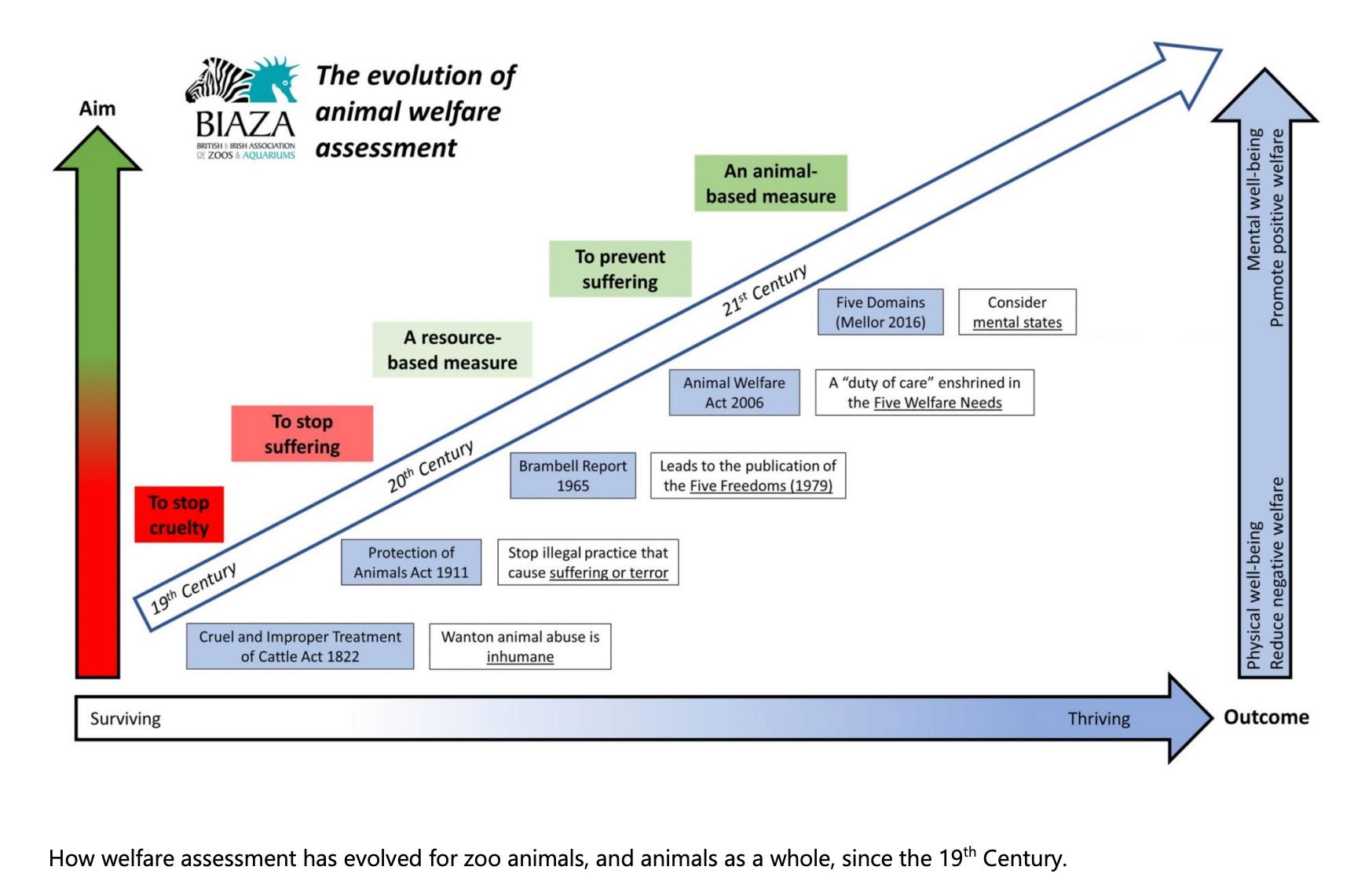
The evolution of our understanding of animal welfare has been quite the journey, As shown by the beautiful chart above, from Harley & Clark (2019).
Originally, caring for animals meant reducing or removing any negative factors to prevent animal suffering (Animal Protection Act, Five Freedoms).
But now, caring is focussed on providing positive experiences and positive challenges (Five Domains).
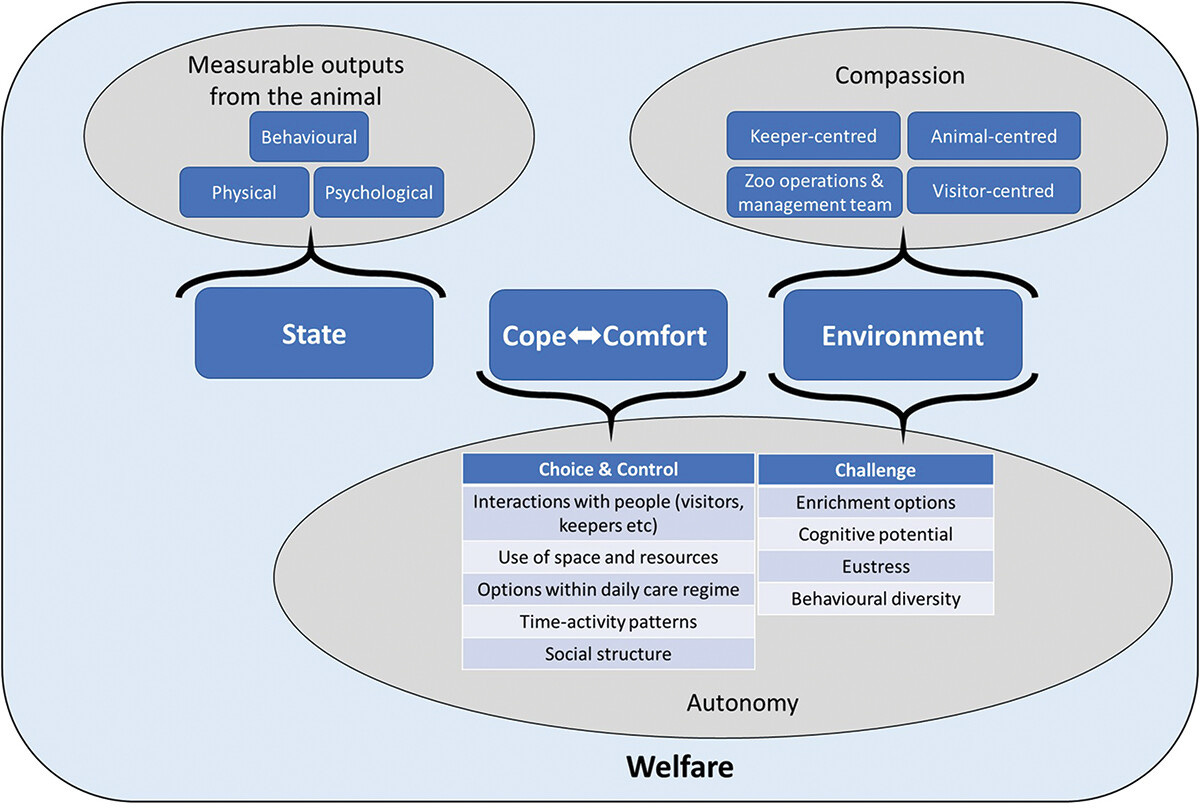
Animals aren't expected to be (dis)stressed but the stress that they do experience (eustress - the ‘good’ kind) - should be beneficial for them to develop and become more behaviourally flexible and resilient.
Providing choice and control and appropriate challenges for animals under human care is essential for providing opportunities for comfort, pleasure and interest.
And this doesn’t just apply to zoo animals. '
But to any animal that has aspects of their lives controlled by us - the care taker.
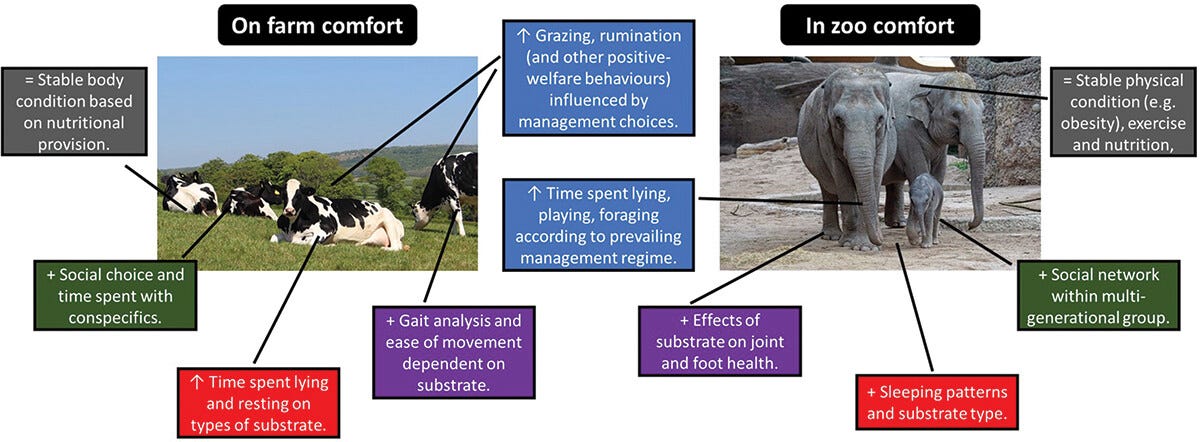
From farm and production animals. Lab animals. Rescue centre or sanctuary animals. Even our pets. Good animal care isn‘t just about cleaning enclosures and feeding. It’s about creating opportunities for animals to experience positive welfare outcomes.
If we are able to view animal management decisions through the lens of what animal welfare actually is, animals will be afforded many more opportunities to thrive under human care. Not just to survive.
Want bite-sized welfare science visuals between newsletters? Follow me on Instagram for weekly animal welfare infographics and science-based insights!
Thanks for sharing this important information. People need to be aware that there are many aspects of a 'good life' for animals, things we need to know about their natural history to provide the correct habitat, social structure and care.