
Do fish feel pain?
For years, scientists have debated this question. Here's what the latest science tells us.

For centuries, fish have been seen by us as cold, silent, and unfeeling creatures. But is this perception really accurate? Compared to mammals, fish are rarely treated with the same level of compassion or welfare.
Maybe it’s because they look and behave so differently, their habitat so foreign to us that it’s hard to imagine that they might have similar experiences and feeling to us. We struggle to relate. To empathise.
In welfare legislation, fish have little to no protection. And many people still believe that it’s more ethical to kill a fish than a farmed mammal.
In fact, the number of fish who die annually for food, surpasses that of any other vertebrate. Being slaughtered on such a mass scale that each unit of the chart below, represents one thousand fish. Mind blowing.
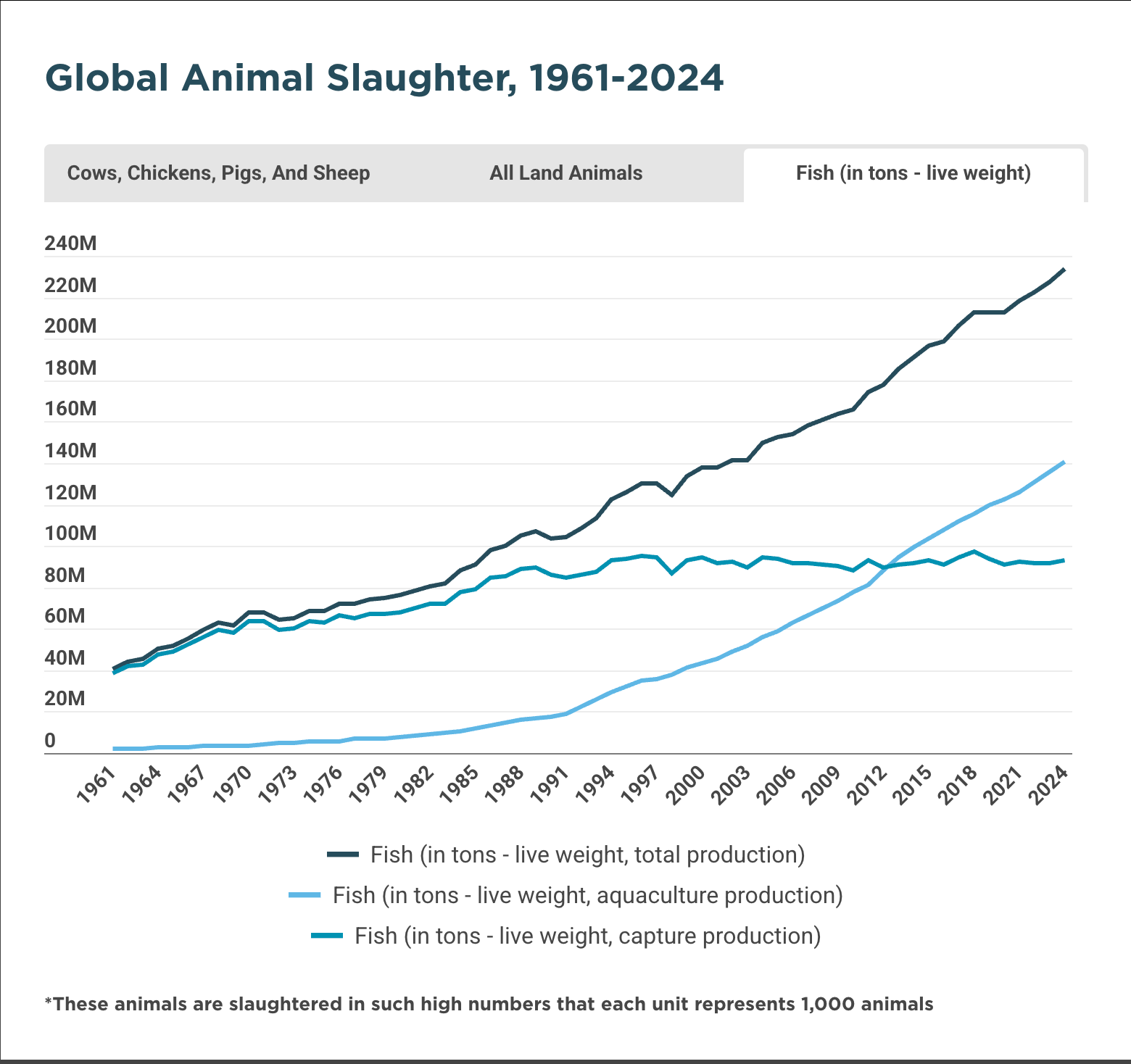
The question of whether fish feel pain is a complex one; leaving scientists divided and debating the topic for years. Until now.
So without further ado, lets dive into the science surrounding the debate.

Exhibit A - Fish anatomy
Some believe that fish can’t feel pain or experience suffering because of their physical differences to mammals, such as the lack of a neocortex - the area of the brain associated with higher mental functioning.
But, despite their differences to us, studies have shown that fish do have the anatomy necessary to produce pain, and it’s strikingly similar to our own.
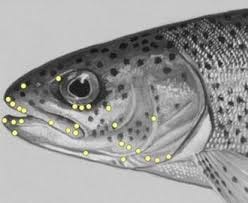
Fish possess nociceptors, special nerve cells in their skin, fins, mouth and guts; similar to those that we have; which detect things that can cause hurt; - like cuts on skin, extreme temperatures, toxic chemicals and physical pressure. In fact, fish sensitivity to pressure is so heightened that it is compared to the human cornea – meaning that handling fish is probably very painful.
While nerves alone are not proof that fish experience pain, it does show that they have the necessary anatomical hardware.
These nerve cells send signals to the brain, triggering behavioural responses that are associated with pain in other animals.
Exhibit B - Behaviours that indicate pain
Scientists have observed that when fish are injured, their behaviour changes dramatically.
Injured fish have been observed to rub the injury area, their breathing accelerates, they lose their appetite and they learn to avoid places or objects they remember that hurt them. They show stress responses, similar to those seen in other species which indicate a negative affective (emotional) state.
When in pain, they become distracted and can’t perform other tasks or pay attention to outside factors; supporting evidence that fish do respond to pain in a cognitive sense.
And though it has been argued by some, these behaviours are not just reflexes. Scientists tried giving injured fish pain killers and with the pain gone, the fish started behaving normally again; suggesting that their nervous systems process pain.
So why do we treat them as if they don’t?

Now, here’s where things get murky
Pain is a subjective experience for us, as humans. We each experience pain differently, and the same can be said for other animals. However, measuring pain in other species is challenging.
While fish do show responses indicating pain, the exact nature and intensity of their experience is unclear.
The vast number of fish species makes generalising about pain experiences difficult. Different species may have varying levels of pain sensitivity and complex nervous systems requiring further study.
Regardless of species differences, ethically, we should be treating all fish as if they have the potential for pain. But this is rarely reflected in real life.
Some scientists argue that pain is an entirely emotional experience; completely separate from the process of detecting harmful stimuli, causing tissue damage. But pain evolved to increase the chances of survival, by reducing injuries.
Why should that mean that we should separate the emotional or mental response from the physical detection?
“If we accept fish experience pain, then this has important implications for how we treat them” – Dr. Lynn Sneddon

Science says: fish suffer for at least 10 minutes after catch
In a study published last year, scientists used the Welfare Footprint Framework, a rigorous, evidence-based way of measuring pain experienced (in minutes).
Scientists applied this framework to rainbow trout, a species farmed and consumed worldwide, when they were slaughtered by air exposure - a method that is widely used in fisheries and aquaculture.
The findings of this research are sobering.
When the fish were pulled from water, they began a slow and stressful death. Their gills collapsed. They gasped. Their blood chemistry spiralled. Oxygen disappeared while carbon dioxide built.
Researchers divided the trout’s suffering into four time segments, from alarm at removal to the final depression of brain activity before unconsciousness and discovered that each trout experienced 10 minutes of moderate to extreme pain during slaughter with the process; 56% of the trout lost consciousness within 20 minutes, however the remaining took even longer.
The results showed that the fish experienced not just death – but a prolonged and intense form of distress when killed in this way.
Stunning can help fish suffer less
The welfare of fish at the time of killing is at the centre of policy discussions at the moment. And with trillions of wild finfishes and billions of farmed finfish killed annually, the scale of potential welfare improvements is substantial.
And stunning could help.
Electrical and percussive stunning causes a faster loss of consciousness and therefore less suffering. But, to be considered humane, pre-slaughter handling must be minimised and the animal must become unconscious immediately and until death.
This study found that electrical stunning, could spare 60 to 1,200 minutes of suffering for every dollar invested, making it one of the most cost-effective welfare interventions known. But in many commercial settings, electrical stunning fails to reliably make fish unconscious. Poor placement of electrodes, inadequate voltage, or faulty machines can undermine the potential benefits.
Percussive stunning, however – by a physical blow to the head – has shown better consistency in lab settings, but is challenging to scale commercially. Fish vary in size, equipment needs to be precisely calibrated and worker fatigue can reduce the effectiveness, potentially leaving fish conscious while bleeding out.
70–100% effective stunning could potentially prevent 1 to 20 hours of moderate to extreme pain.
And despite the differences between our species, the evidence is clear; one thing we share in common is our ability to experience this. Dismissing it is no longer justifiable.
Welfare policies and slaughter standards must catch up to the science and balance animal welfare, economic and environmental considerations in fisheries and aquaculture.
🐟 Let minnow your thoughts in the comments 🐟
All living creatures feel fear and pain why do prey animals get away from predators?
Thanks. A very informative and well-written article.